memento mori
I thought we'd start with something light.

Welcome to the first real issue of Good Work.
Each week you’ll get an idea to consider and an exercise to put it into practice. The goal will always be to push you toward more good work, because I think you’re capable of it.
Today’s idea
Our mortality! Specifically, the concept of memento mori, which translates to ‘remember you must die’.
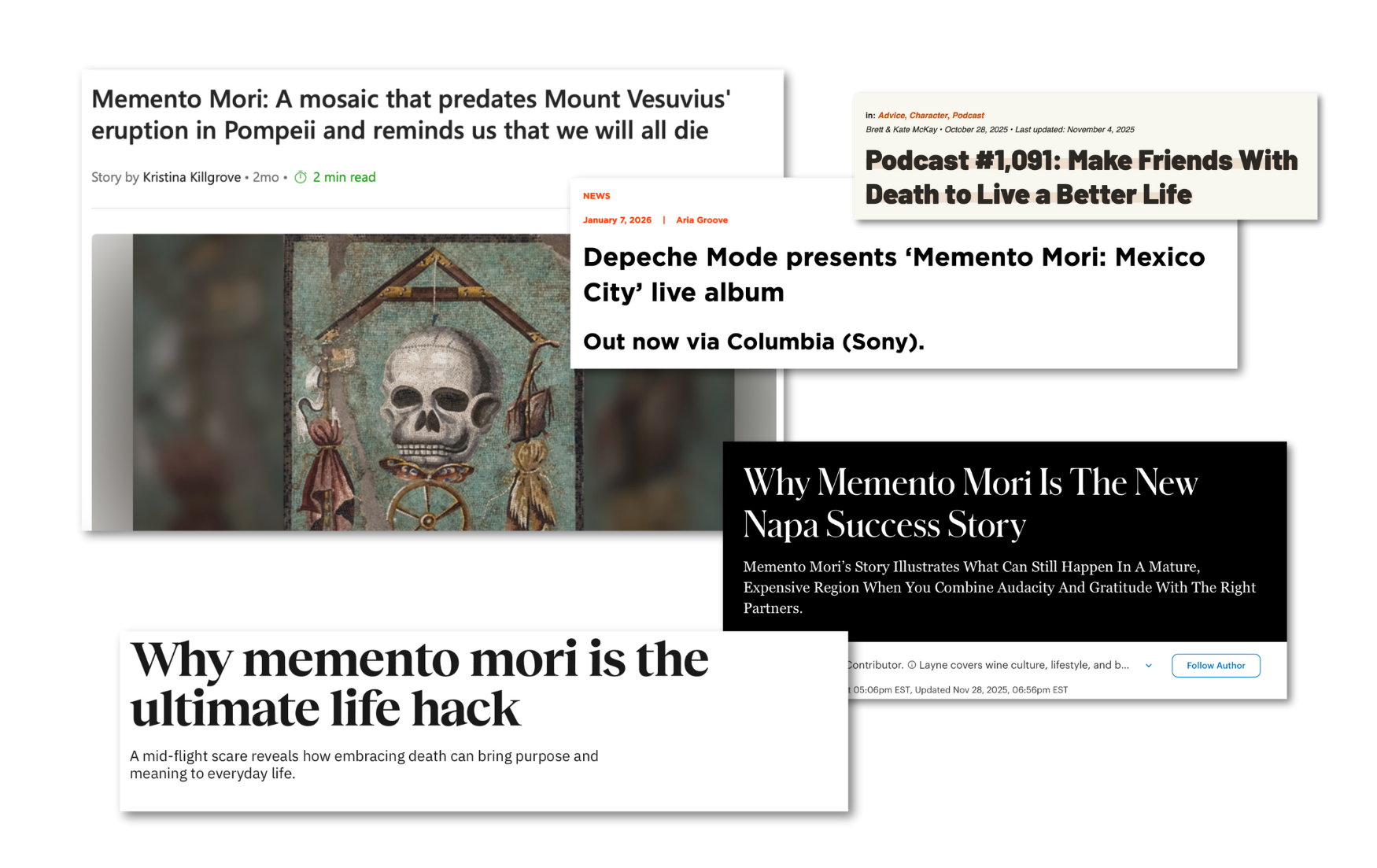
You may not love considering your own mortality or the fragility of life, but I encourage you to give it a shot. I faced dying at 25 with cancer, and my comfort with my inevitable death has been my unfair advantage ever since - particularly at work.
We benefit from having default patterns, shortcuts, and filters to run our lives through; they help us process and understand things, and create clarity and confidence as we make hundreds of choices each day.
Memento mori is one of my favorite filters, because it creates a high and clear bar for how I spend my time, much of which is spent working. It reminds us of:
The impermanence of it all: You, your career, your company, that feature you built, the money you make, that list you made it onto - none of it lasts forever.
The value of our attention: Time is limited and unpredictable; how you spend it matters. Where you dedicate your attention is what fills your world.
Our agency and free will: You don’t control how long you’re here, but you do control the choices you make. You can change almost anything at almost any moment.
When you apply the concept of memento mori directly to your work life, things can initially look bleak.
Tippy-tapping on your keyboard to make some guy or some brand some money probably isn’t going to land in the ‘this is a great use of my time’ bucket, but this is where we need the discipline to push a step further.
Consider the second and third order impact your time at work is creating.
Are you or your team creating things that bring people joy or comfort?
Are you helping create access to resources or knowledge?
Are you creating financial stability for yourself so you’re able to spend time and energy helping your community or causes you care about?
Are you supporting your coworkers’ growth toward a life they’re proud of?
The work itself isn’t usually where you’ll find your impact or fulfillment - it’s in the second and third order effects of your time contributing to a larger system.
Consider the systems you’re perpetuating, and apply memento mori here. Are you moving the world in a direction you like with your work?
In practice
We’re going to write our obituaries today (but that’s so0o0o dark - I KNOW, but often finding light requires darkness, sorry!!).
Assume you die this week. Freak accident, peaceful passing, whatever you like. Write three obituaries for yourself from the following perspectives:
A close friend or family member (choose someone specific)
A coworker (choose someone at or related to your current role)
Someone who didn’t know you personally but was aware of you on the internet
Write them in the following format:
I knew [your name], and they were ____, _____, and _____ [three adjectives].
They spent their time doing _____[how they knew you to spend their time] and I think the world will remember them most for _____[the impact they perceived you to make].
They made me feel _____[how you imagine you, on average, make them feel]
After you’re done writing, walk away for a few hours. Return later and read them - pay attention to how they make you feel in your heart in addition to how your brain responds.
If you’re feeling lackluster, or like they don’t fully represent everything you know you’re capable of creating in this world of ours, consider what would need to change for that to be different. LMK how it goes - you can reply to this directly.
Office hours
Q: Do you think that “dream jobs” are real? When we were younger we were always asked what we dreamed of being when we grow up. But now that I’m grown up, frankly I’ve become quite cynical that it’s impossible to have a dream job if you work for others.
A: I think of dream jobs the same way I think of soulmates. I believe in them, but I think the media did us dirty in setting the wrong expectations.
We were told that a dream job was your favorite hobby or passion reincarnated into a job that would pay you enough to live a comfortable and fulfilling life. I believe a dream job is an arrangement where you:
do work you enjoy and are good at,
with people you respect,
where you’re learning new things,
making enough money to fund a comfortable and fulfilling personal life,
with enough free time to enjoy that personal life.
With this framework, it’s actually very possible to have a ‘dream job’ while working for others. Working for others can be really great, if they see the world through a similar lens to you.
In my experience, the jobs I’ve had the most friction in have involved differing belief systems between myself and the person/company I’m working for - when you solve for that, many other elements of this equation tend to fall into place.
This framework is also a case, for some, for a portfolio career. Portfolio careers can include full time roles, or can be a mix of PT projects that culminate in the situation above. They’re great because they give you more control over each of the equation pieces individually. They’re hard because they sometimes lack security and predictability.
My tldr advice is to consider aspiring toward a dream life, rather than a dream job. A dream life might include a ‘boring’ but healthy role that enables an incredible existence outside of that role, filled with passion projects, community building, self care, and exploration.
Until next week,