

the difference is in the details
if you want to stand out, start practicing the art of the extra 5%.

HELLO have you missed me? I doubt it, given how focused I know you’ve been on achieving your dreams, or maybe how disassociated you’ve been lately because ✨gestures widely✨.
Anyway, as you may or may not know I just went through a big transition in my day job which inevitably led to a reshuffling of all sorts across all pieces of life. I’m finally settling into a new normal and excited about starting to dig back in here, with you, on how the heck we should be thinking about and approaching work these days.
Back to our regularly scheduled programming!
Welcome to Good Work - your bi-weekly-ish work therapy appointment.
Each time, you’ll get an idea to consider and an exercise to put it into practice, plus my POV on a reader question about work. The goal will always be to push you toward more good work, because I think you’re capable of it.
Today’s idea
You’ve probably heard a lot of opinions on what the new differentiators are in the age of AI - taste, personality, typos, distribution, personal brand, etc etc etc. None of those are necessarily wrong, but I do think there’s one differentiator that’s always been powerful, and will always continue to be — the details of what you put into the world.
The truth is that there aren’t very many original ideas anymore. You’re likely working on projects that many before you have worked on, and many after you will as well. So really, whether your finished product stands out amongst the hundreds of thousands of others, comes down to whether you deliver it at 100% or 105%.
100% looks like great work - you did all the things that were expected with no errors and drove results. The problem with 100% is that many have done the same thing at 100% before, which makes it…boring, fine, neutral, forgettable.
105% looks like that same great work, but with an opinion. With taste, with craft, with creativity, with joy, with care. 105% is memorable, and makes people stop and wonder how you came up with that tiny detail that was truly delightful. 105% integrates your own personal experiences and ideas in an unmistakably human way, with ideas an LLM would never suggest because they’re too left of center.
105% does NOT mean outworking others in terms of hours. In fact, the more overworked you are, the less creative you’ll likely be. Consider cutting a corner or two on the boring stuff to save a bit of energy for that extra 5%.
Here are a few top of mind examples of 105% work:
The bird sounds in the Masters broadcast
Though never actually confirmed from what I can tell, it’s widely believed that the Masters broadcast includes background noise of pre-recorded birds from the surrounding areas. This sound overlay is a defining feature of the peaceful, luxe Masters brand for those watching at home. I hope the person that randomly suggested piping bird sounds in many years ago got their roses and always has a cool pillow on both sides. (here’s a similar example from an audio engineer for the NBA)
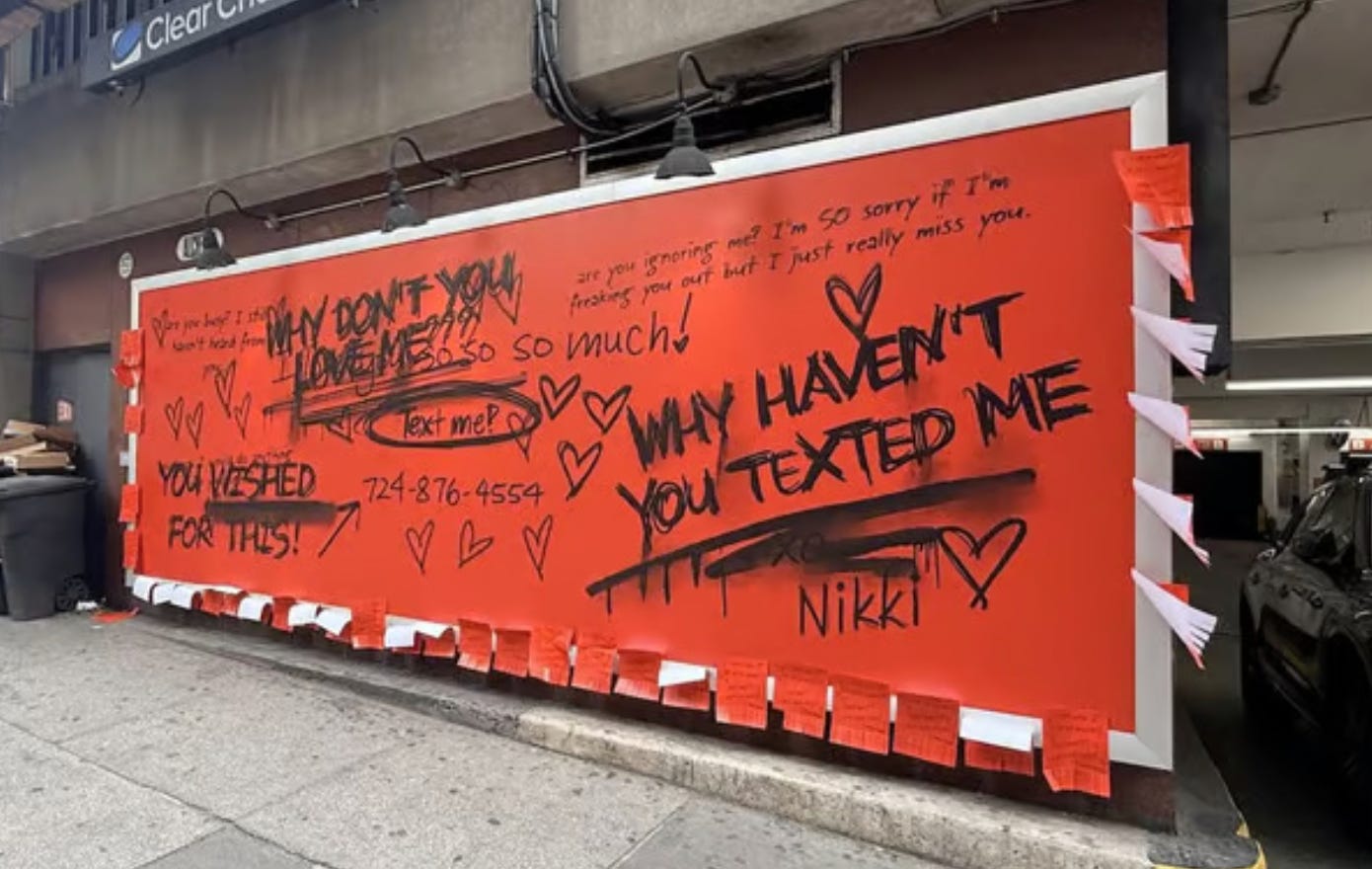
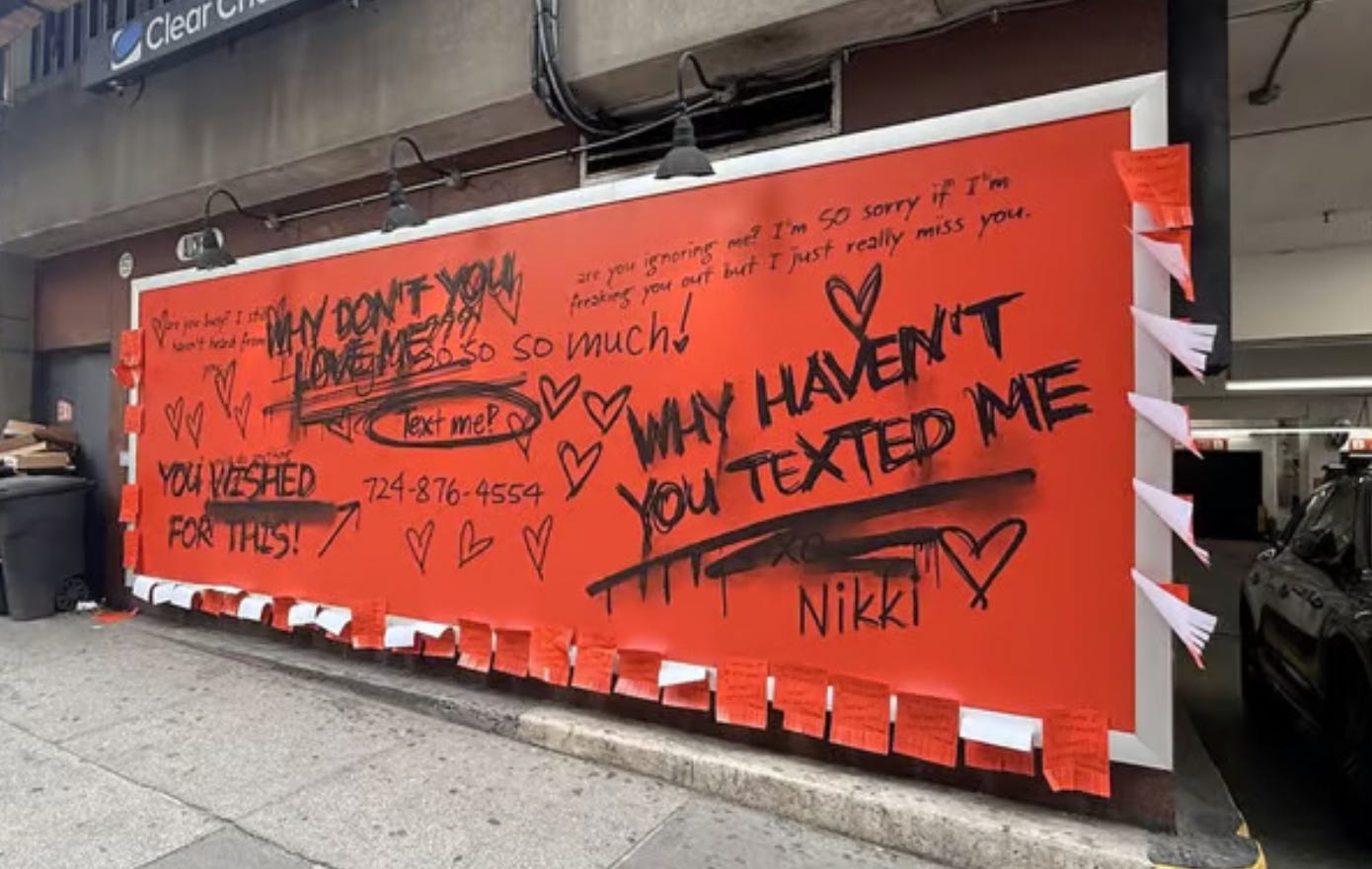
This billboard campaign for Obsession
A billboard for a movie isn’t exactly a new idea, and neither is including a number you can text (I just called ‘Kacey Musgraves’ on our way home from Palm Springs the other day from a number on a billboard). But whoever had the idea to use a billboard to mimic the type of horror the movie was centered on through a progressively changing visual & coordinated interaction better have gotten a bonus.
Carly Valancy’s virtual garden for her Reach Out Party program
Carly runs a well-loved program that helps folks focus on bold outreach for a defined amount of time as a cohort. That’s a great idea on its own, but her extra 5% is that she built a virtual garden that gets planted throughout the cohort with each email that’s sent. Delightful!
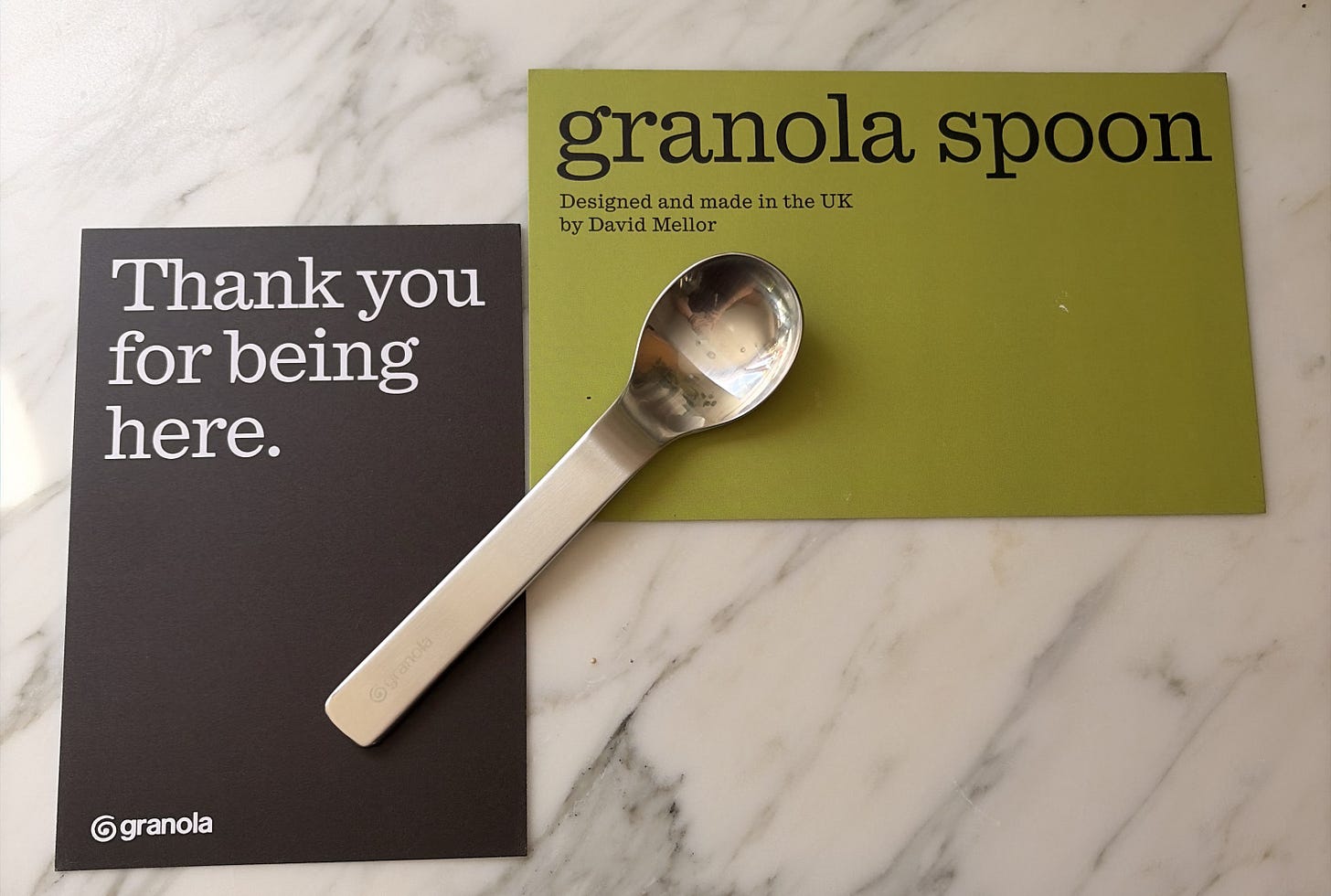
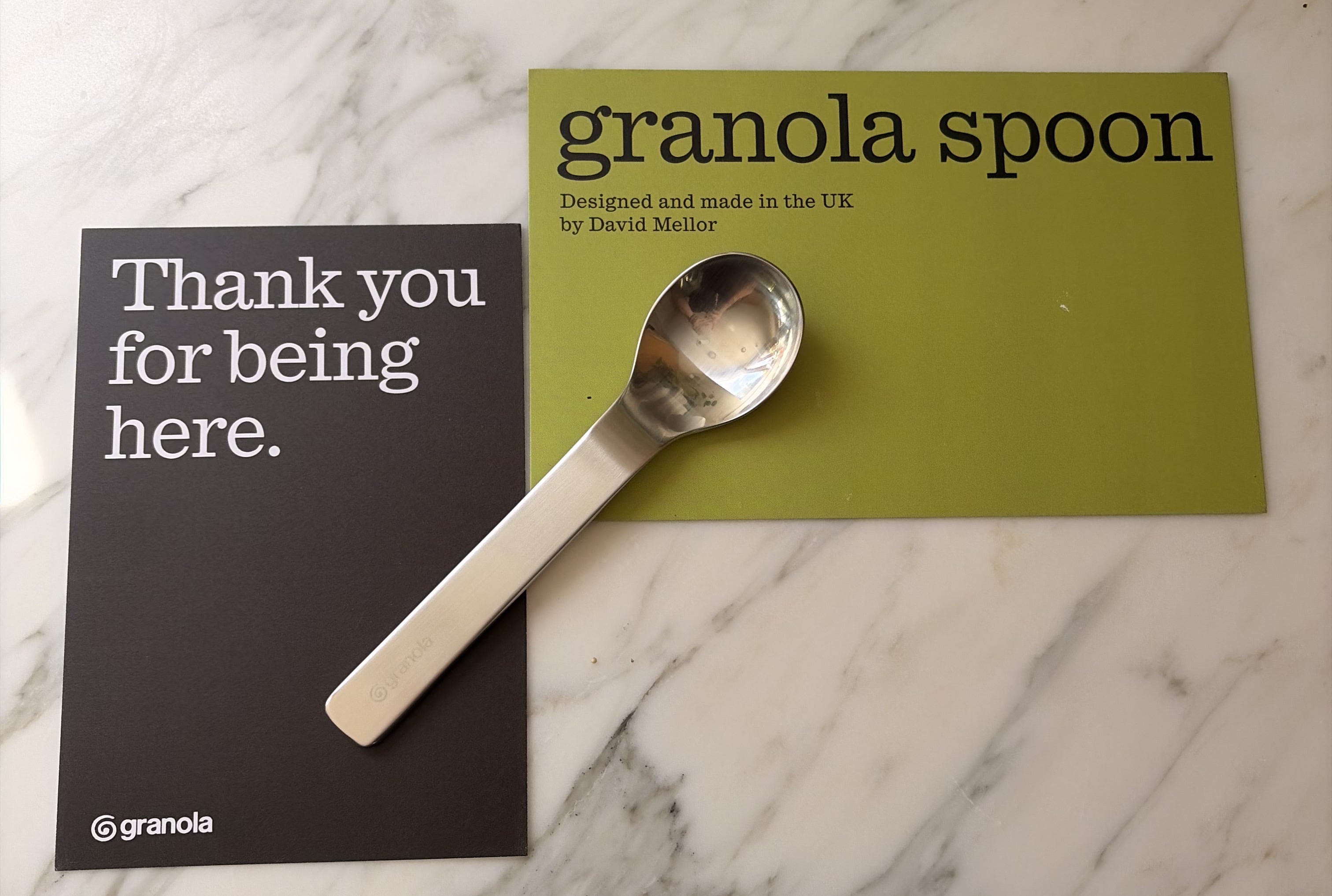
The infamous Granola spoons
Influencer gifting seems like a legacy playbook at this point, but Granola recently found a way to break through the noise by combining tongue in cheek humor (granola, spoon, get it?), great design (a neurospicy person’s dream spoon), and a deep understanding of their audience (chronically online folks with an appreciation for well made, clever, non-software things).
In practice
There are two parts to the art of the extra 5% - identifying the opportunities and coming up with the ideas. Let’s tackle 3 opportunities for you to do that extra 5%, at levels easy through hard.
Level 1: A text to a friend
Pick up your phone and pick someone to text - maybe someone you’ve been meaning to check in with, maybe your sibling, maybe your bestie. The 100% here would be sending the text. 105% is sending a text that makes them smile, laugh, or feel extra understood or loved.
Instead of:
Hi! How was your week?
Try:
Hi! I thought of you this week when I [something you saw or did that they’d appreciate or know a lot about]. How is [thing they have going on] going lately?
Level 2: A message at work
Pay extra close attention to the messages you send at work this week. Decide which ones might benefit from the extra 5% treatment - maybe one to your manager or to a client. 100% is sending a clear, effective message. 105% is sending a message that makes them feel confident, in the loop, and excited about what you’re working on.
Instead of:
Here’s an update on how things are going (followed by a bulleted list of updates)
Try:
Here’s a TLDR to ground you with key points and takeaways
Here’s a set of bullets with bolded headlines + details + visuals + the ability to dive in further if relevant and interested
Here’s a kind sign off note with a reference to something they have going on or an acknowledgement of a shared joke or commonality
Level 3: A project at work
Okay now you’re warmed up - time to tackle a real project and start standing out for your brilliance. Choose a project you’re working on, and take a few minutes to put yourself on the receiving end of that project. Maybe the audience is your manager or internal stakeholders, maybe it’s folks on the internet, maybe it’s attendees of an event, maybe it’s your customers.
Imagine you are your audience, and you’re seeing your work for the first time. How do you feel? If the answer is neutral to positive, we have some opportunities for improvement.
Start brainstorming - what could you add or change that would make your audience feel something? What do they love? What do they laugh at? What do they always ask for? How could you pause them in their scroll or catch them slightly off guard? What would tell them that a real human with a real set of experiences and an imagination worked on this project?
If you’re up for it, send me what you come up with. I love to hear creative approaches to work ♥
Office hours
Q: I started a new job and inherited a team of direct reports - they’re not who I would hire but I have to make it work. What do I do?
A: In a dream world, I think we’d always get to build our teams from scratch. It’s a fact that there are certain personalities and experience sets that you are more and less comfortable managing and working alongside, and I hope you’ve been lucky enough to experience the magic of a really excellent manager/report dynamic.
That being said, we don’t live in a dream world, and inheriting a team is hard. Not only are you walking into a set of personalities that you may or may not jive with naturally, but you’re also walking into a set of shared context that does not include you or your POVs.
I always start there, by prioritizing gathering context vs information. Information is what’s going on and how it’s going - context is why those choices were made and why we feel things are going well or not well. By establishing shared context, you’ll be able to much more effectively partner and lead change management where needed.
Another piece of advice would be to see if you can find a quick win or two in your first 30 days. Many will tell you to just observe and ‘sponge’ in your first month, but if you listen closely there will be a few things that clearly need to get taken care of with very little nuance in the how. A quick win can go a long way in establishing trust and a positive outlook on working together.
As always, feel free to reply if something resonated (or didn’t!).
See you soon,
when it comes to "customer facing" work i love calling this the oft (maybe tired?) phrase unreasonable hospitality
Oh wow I love all of these SO much